Old Dogs …

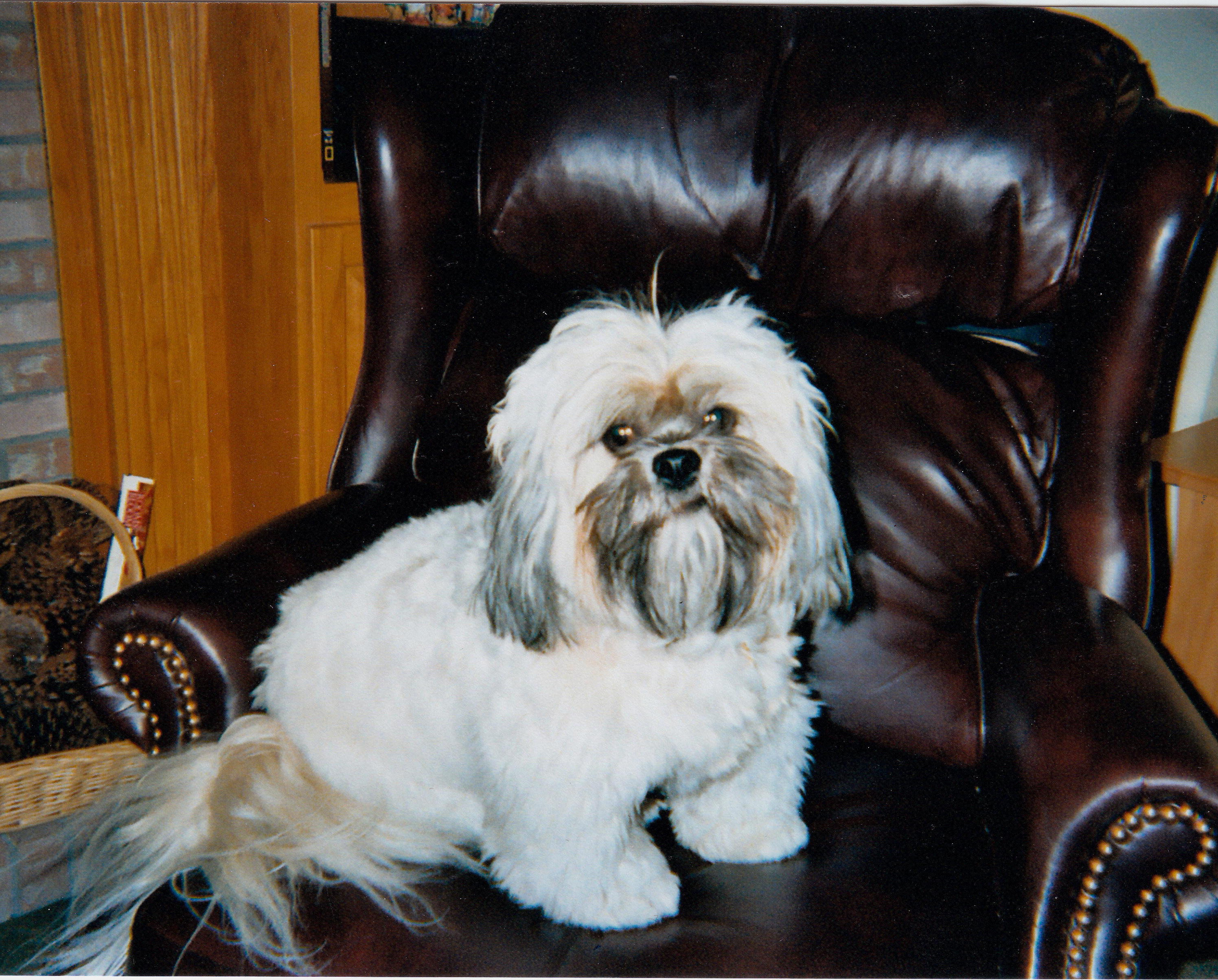
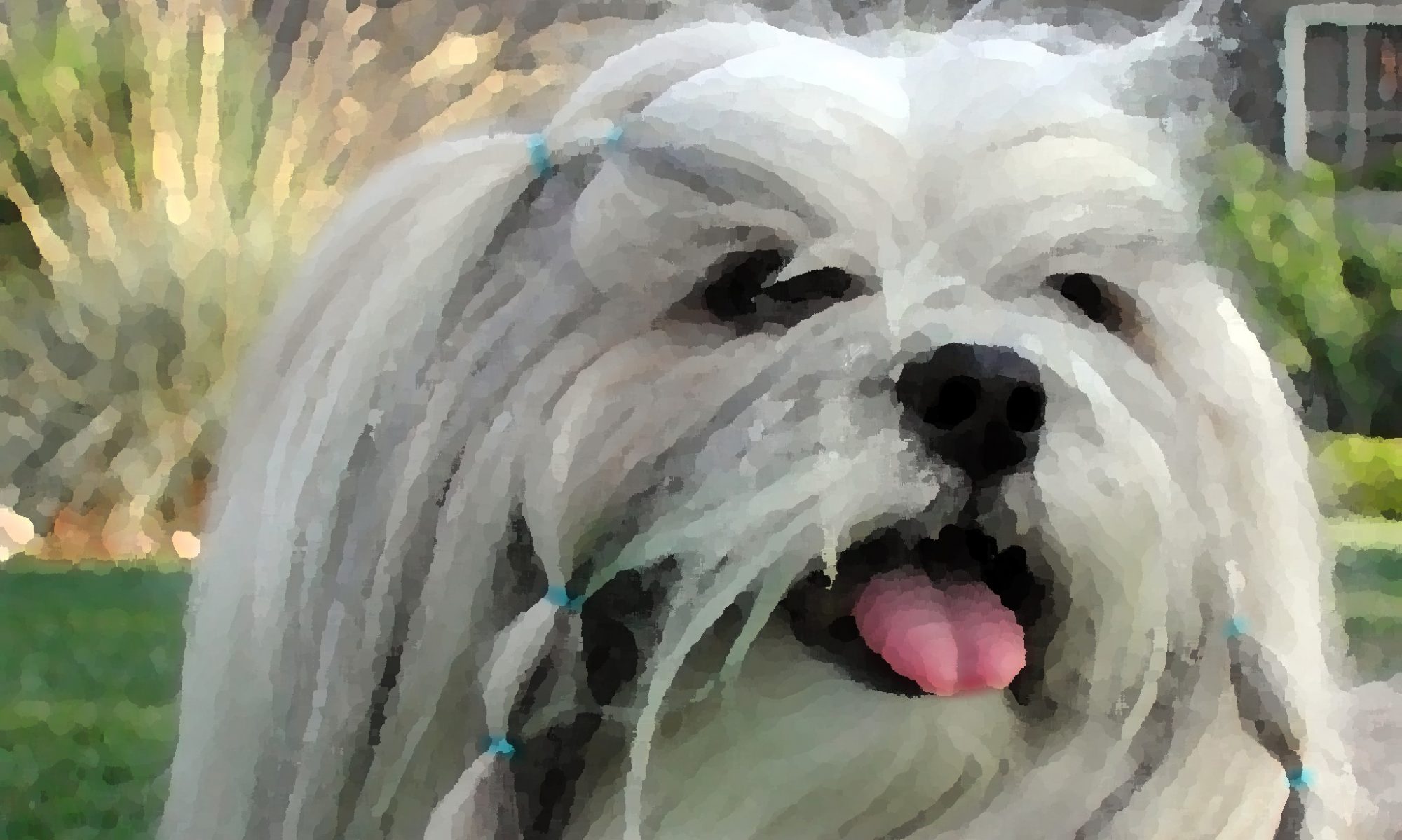
My beautiful red girl, Ali, turned eleven earlier this month.  While that’s not “old” considering some Apsos can live well into their late teens or even into their 20s, she has entered what I term the “worry years.”  There’s this little nagging thought at the back of my brain which reminds me her days are numbered.  All that remains is what that number actually is … a mystery at this point.  And so, from time to time, I worry.  How long?  How will her health hold out?  Is she developing arthritis or a little doggy dementia?  Is there something I can do to mitigate the aging process besides what I’m already doing?  Each day becomes more precious as I notice the subtle signs of aging. 

Ali ... with that Mona Lhasa smile

Ali … with that “Mona Lhasa” smile

Old Dogs …

 They can be eccentric, slow afoot, even grouchy. But dogs live out their final days, says The Washington Post’s Gene Weingarten, with a humility and grace we all could learn from.

Not long before his death, Harry and I headed out for a walk that proved eventful. He was nearly 13, old for a big dog. Walks were no longer the slap-happy Iditarods of his youth, frenzies of purposeless pulling in which we would cast madly off in all directions, fighting for command. Nor were they the exuberant archaeological expeditions of his middle years, when every other tree or hydrant or blade of grass held tantalizing secrets about his neighbors. In his old age, Harry had transformed his walk into a simple process of elimination – a dutiful, utilitarian, head-down trudge. When finished, he would shuffle home to his ratty old bed, which graced our living room because Harry could no longer ascend the stairs. On these walks, Harry seemed oblivious to his surroundings, absorbed in the arduous responsibility of placing foot before foot before foot before foot. But this time, on the edge of a small urban park, he stopped to watch something. A man was throwing a Frisbee to his dog. The dog, about Harry’s size, was tracking the flight expertly, as Harry had once done, anticipating hooks and slices by watching the pitch and roll and yaw of the disc, as Harry had done, then catching it with a joyful, punctuating leap, as Harry had once done, too.

Harry sat. For ten minutes, he watched the fling and catch, fling and catch, his face contented, his eyes alight, his tail a-twitch. Our walk home was almost … jaunty.

Some years ago, The Washington Post invited readers to come up with a midlife list of goals for an underachiever. The first-runner-up prize went to: “Win the admiration of my dog.”

It’s no big deal to love a dog; they make it so easy for you. They find you brilliant, even if you are a witling. You fascinate them, even if you are as dull as a butter knife. They are fond of you, even if you are a genocidal maniac. Hitler loved his dogs, and they loved him.

Puppies are incomparably cute and incomparably entertaining, and, best of all, they smell exactly like puppies. At middle age, a dog has settled into the knuckle-headed matrix of behavior we find so appealing – his unquestioning loyalty, his irrepressible willingness to please, his infectious happiness. But it is not until a dog gets old that his most important virtues ripen and coalesce. Old dogs can be cloudy-eyed and grouchy, gray of muzzle, graceless of gait, odd of habit, hard of hearing, pimply, wheezy, lazy, and lumpy. But to anyone who has ever known an old dog, these flaws are of little consequence. Old dogs are vulnerable. They show exorbitant gratitude and limitless trust. They are without artifice. They are funny in new and unexpected ways. But, above all, they seem at peace.

Kafka wrote that the meaning of life is that it ends. He meant that our lives are shaped and shaded by the existential terror of knowing that all is finite. This anxiety informs poetry, literature, the monuments we build, the wars we wage-all of it. Kafka was talking, of course, about people. Among animals, only humans are said to be self – aware enough to comprehend the passage of time and the grim truth of mortality. How, then, to explain old Harry at the edge of that park, gray and lame, just days from the end, experiencing what can only be called wistfulness and nostalgia? I have lived with eight dogs, watched six of them grow old and infirm with grace and dignity, and die with what seemed to be acceptance. I have seen old dogs grieve at the loss of their friends. I have come to believe that as they age, dogs comprehend the passage of time, and, if not the inevitability of death, certainly the relentlessness of the onset of their frailties. They understand that what’s gone is gone.

What dogs do not have is an abstract sense of fear, or a feeling of injustice or entitlement. They do not see themselves, as we do, as tragic heroes, battling ceaselessly against the merciless onslaught of time. Unlike us, old dogs lack the audacity to mythologize their lives. You’ve got to love them for that.

The product of a Kansas puppy mill, Harry was sold to us as a yellow Labrador retriever. I suppose it was technically true, but only in the sense that TicTacs are technically “food.” Harry’s lineage was suspect. He wasn’t the square-headed, elegant type of Labrador you can envision in the wilds of Canada hunting for ducks. He was the shape of a baked potato, with the color and luster of an interoffice envelope. You could envision him in the wilds of suburban Toledo, hunting for nuggets of dried food in a carpet.

His full name was Harry S Truman, and once he’d reached middle age, he had indeed developed the unassuming soul of a haberdasher. We sometimes called him Tru, which fit his loyalty but was in other ways a misnomer: Harry was a bit of an eccentric, a few bubbles off plumb. Though he had never experienced an electrical shock, whenever he encountered a wire on the floor-say, a power cord leading from a laptop to a wall socket-Harry would stop and refuse to proceed. To him, this barrier was as impassable as the Himalayas. He’d stand there, waiting for someone to move it. Also, he was afraid of wind.

While Harry lacked the wiliness and cunning of some dogs, I did watch one day as he figured out a basic principle of physics. He was playing with a water bottle in our backyard-it was one of those five-gallon cylindrical plastic jugs from the top of a water cooler. At one point, it rolled down a hill, which surprised and delighted him. He retrieved it, brought it back up and tried to make it go down again. It wouldn’t. I watched him nudge it around until he discovered that for the bottle to roll, its long axis had to be perpendicular to the slope of the hill. You could see the understanding dawn on his face; it was Archimedes in his bath, Helen Keller at the water spigot.

That was probably the intellectual achievement of Harry’s life, tarnished only slightly by the fact that he spent the next two hours insipidly entranced, rolling the bottle down and hauling it back up. He did not come inside until it grew too dark for him to see.

I believe I know exactly when Harry became an old dog. He was about nine years old. It happened at 10:15 on the evening of June 21, 2001, the day my family moved from the suburbs to the city. The move took longer than we’d anticipated. Inexcusably, Harry had been left alone in the vacated house-eerie, echoing, empty of furniture and of all belongings except Harry and his bed – for eight hours. When I arrived to pick him up, he was beyond frantic.

He met me at the door and embraced me around the waist in a way that is not immediately reconcilable with the musculature and skeleton of a dog’s front legs. I could not extricate myself from his grasp. We walked out of that house like a slow-dancing couple, and Harry did not let go until I opened the car door.

He wasn’t barking at me in reprimand, as he once might have done. He hadn’t fouled the house in spite. That night, Harry was simply scared and vulnerable, impossibly sweet and needy and grateful. He had lost something of himself, but he had gained something more touching and more valuable. He had entered old age.

In the year after our move, Harry began to age visibly, and he did it the way most dogs do. First his muzzle began to whiten, and then the white slowly crept backward to swallow his entire head. As he became more sedentary, he thickened a bit, too.

On walks, he would no longer bother to scout and circle for a place to relieve himself. He would simply do it in mid-plod, like a horse, leaving the difficult logistics of drive-by cleanup to me. Sometimes, while crossing a busy street, with cars whizzing by, he would plop down to scratch his ear. Sometimes, he would forget where he was and why he was there. To the amusement of passersbys, I would have to hunker down beside him and say, “Harry, we’re on a walk, and we’re going home now. Home is this way, okay?” On these dutiful walks, Harry ignored almost everything he passed. The most notable exception was an old, barrel-chested female pit bull named Honey, whom he loved. This was surprising, both because other dogs had long ago ceased to interest Harry at all, and because even back when they did, Harry’s tastes were for the guys.

Still, when we met Honey on walks, Harry perked up. Honey was younger by five years and heartier by a mile, but she liked Harry and slowed her gait when he was around. They waddled together for blocks, eyes forward, hardly interacting but content in each other’s company. I will forever be grateful to Honey for sweetening Harry’s last days.

Some people who seem unmoved by the deaths of tens of thousands through war or natural disaster will nonetheless grieve inconsolably over the loss of the family dog. People who find this behavior distasteful are often the ones without pets. It is hard to understand, in the abstract, the degree to which a companion animal, particularly after a long life, becomes a part of you. I believe I’ve figured out what this is all about. It is not as noble as I’d like it to be, but it is not anything of which to be ashamed, either.

In our dogs, we see ourselves. Dogs exhibit almost all of our emotions; if you think a dog cannot register envy or pity or pride or melancholia, you have never lived with one for any length of time. What dogs lack is our ability to dissimulate. They wear their emotions nakedly, and so, in watching them, we see ourselves as we would be if we were stripped of posture and pretense. Their innocence is enormously appealing. When we watch a dog progress from puppyhood to old age, we are watching our own lives in microcosm. Our dogs become old, frail, crotchety, and vulnerable, just as Grandma did, just as we surely will, come the day. When we grieve for them, we grieve for ourselves.

From the book Old Dogs, text by Gene Weingarten and Michael S. Williamson, based on a longer excerpt that originally appeared in The Washington Post.

© 2008 by Gene Weingarten and Michael S. Williamson.    Reprinted by permission of Simon & Schuster Inc.
The Tibetan Dog Reincarnation …

As appearing in the November 18, 2008 The Norman Transcript … 

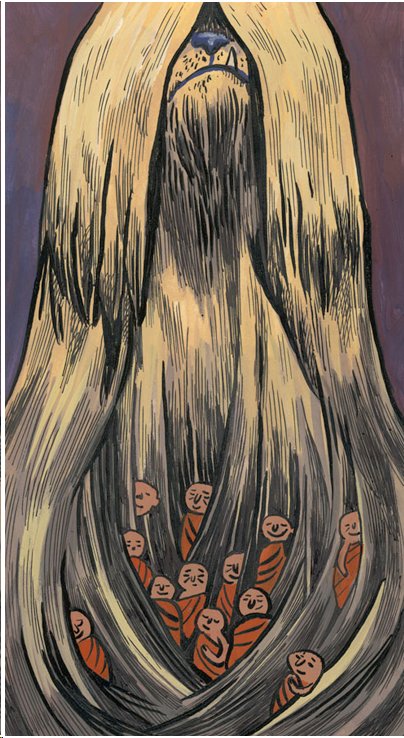
Bedtime for Buddhas
Bedtime for Buddhas – L. Park

The Tibetan Dog Reincarnation

In Tibetan lore each Lama (like the Dali) has a Temple dog. When a Lama dies it is believed that he is reincarnated as another Temple dog. Thus he would serve two lifetimes of strict adherence to ritual worship, chanting, meditating, sacrifice, no tv, no dessert and no squeaky bone toy.

Sid saw Buster abandoned on the highway. At first she thought he was a porcupine. Covered with burrs, leaves and sticks, his hair matted in dreadlocks, he was a pitiful sight, but… he was a dog.

She pulled over, opened the door and picked up Buster. It was a hot Saturday afternoon in southern Pennsylvania. Sid drove back to the State Police Barracks and asked the location of the Humane Society.

“Don’t have one in Fulton County,” said the policeman.

“A dog catcher?” she asked.

“I saw his wife at the grocery store. He’s gone for the weekend. Be back Tuesday,” replied the officer cheerfully.

“Is there someplace I could ask about a lost dog report? Like a radio station or newspaper?”

“Nope. But you could take him to the pound in Adams County. Just don’t tell them you’re from Fulton County or they won’t take him.”

He gave Sid a pair of plastic handcuffs so she could take Buster out to pee. Bent at the waist, grasping the stiff handcuff leash she looked like a beachcomber dusting the lawn with a giant hairball.

At a strip mall in Chambersburg she bought a leash, harness, crate and dog food. This was how she arrived at her destination, the house of a friend who promptly said, “You can’t leave it here.” She put him in his crate, from which he escaped three times, the last of which was from the crate; duct-taped, bungee-corded, locked and put in the garage… in 15 minutes. Houdini couldn’t have done it better. They all agreed that Buster had adopted Sid.

Later at the dog wash, the attendant recognized the flea-bitten, moth ridden, canine flannel rag mop as a Lhasa Apso, a revered Tibetan Temple Guard Dog. Trying to recreate his recent history, they concluded that after his first life as a Lama, followed by his reincarnation as a lama’s dog, both lives spent under strict monastic guidelines, he had finally escaped.

“Free at last. Free at last,” he must have been chanting when Sid picked him up on the highway, handcuffed him, crated him, then the final indignity, had him neutered.

Which just goes to show you that the grass ain’t always greener on the other side of the Dali.

~~ Baxter Black, author, cowboy poet and former large animal veterinarian, lives in Benson, Ariz.


Calling all …

… art lovers!  I’m sure you’ve experienced this at one time or another.  You go into a store (whether brick-n-mortar or online) and find all these really cool breed-related items.  Labs, Tzus, Pugs, Yorkies, German Shepherd Dogs, etc. are all represented … everything but an Apso!  I even encounter this when shopping the myriad of vendors at the dog shows — very little in the way of my chosen breed. 

Every year at our National Specialty (the American Lhasa Apso Club or “ALAC”), special trophies are obtained for the winners.  These typically are Best of Breed (BOB), Best of Opposite Sex to Best of Breed (BOS), Best of Winners (BW) (from the class dogs), Winners Dog (WD) and Winners Bitch (WB).  This year’s trophies are spectacular … original oils by artist Karen McClelland.  An exhibitor, she understands the nuances and anatomy of the canine, resulting in true-to-life work.   Scroll down her Non-Sporting page to view the three Apso prints she’s offering as limited edition giclees on canvas!  This has to be my favorite …

"Tibetan Brass"
"Tibetan Brass" by artist Karen McClelland

Karen will also do commission work for those wishing to memoralize a beloved pet.  Additionally, she does quite a bit of equine art which can be seen on her blog … Karen McClelland Blog.

Hmmmm, I think I have a wall that needs a little “something” …


Bosa …

We have a new foster available for adoption … 

My new haircut!
My new haircut!

Bosa (pronounced “Bow-sah” and meaning “Ivory”) is a one-year old Apso with boundless energy! She is spayed, housetrained, up-to-date on vaccs, microchipped and healthy! Bosa enjoys daily walks and playtime with other dogs her size. Toys, nylabones & kongs keep her busy for hours. Plays well with cats.  Because of her high energy, she will not be suitable for homes with small children.  She’s a curious pup and will need someone who can provide supervision and a puppy-proofed environment.

Coming into rescue, Bosa had no obedience training. She is currently learning manners and commands necessary to be well-behaved little dog. Her new family should be willing to commit to furthering her obedience studies and providing a puppy-proofed house. Bosa is crate-trained and sleeps through the night in her family’s bedroom. If you are interested in adopting Bosa, please begin our process by filling out an application at ApsoRescueColorado.org.

I'm a happy girl ...
Bosa (right)
Bosa (right)

Okay, call me paranoid but …

… the following article just underscores what I’ve known for years.  That pets rely on their humans to keep them safe from harm and it is our responsibility to ensure their well-being.  Think of your Apso as a perpetual two-year old.  Would you leave a toddler outside unattended for the day … left in a car at the grocery store … allowed to roam the neighborhood without supervision?   Uhhh, I didn’t think so.  And your Apso — a perpetual toddler — should be supervised closely as well.  These are not isolated incidents happening to “other people.”  Take heed, pet owners.  The life you save may be sitting at your feet this very moment …

American Kennel Club Cautions Owners: Pet Theft on the Rise;

AKC Appears on NBC’s Today Show Offering Tips to Keep Pets Safe

Dog Owners and Breeders Advised to Keep Dogs Safe at Home and on the Road

Tuesday, April 08, 2008


The American Kennel Club® is warning pet owners and breeders about an alarming rise in dog thefts in recent months. From parking lots to pet stores and even backyards, more dogs are disappearing. In the first three months of 2008, the AKC has tracked more than 30 thefts from news and customer reports, versus only ten for all twelve months of 2007.


Media reports have chronicled the escalation of these “dog-nappings” from all around the country. Incidents have included armed robbers entering a breeder’s home, tiny puppies being stuffed into purses at pet stores and most recently, purebred pets being snatched from cars in parking lots and even shelters.


“The value of pets in people’s lives has been on the rise for a long time and now we are seeing thieves trying to capitalize on this. Whether they seek to resell the dog, collect a ransom or breed the dogs and sell their offspring, thieves seem to be attuned to the increased financial and emotional value pets have in our lives,” said AKC spokesperson Lisa Peterson. “Losing a treasured family pet is devastating to the owner.”


“Criminals look for weaknesses and exploit them. They know pets can’t protect themselves, so that means owners need to be alert,” said Lt. John Kerwick, a law enforcement K-9 handler and the President of the U.S. Police Canine Association, Region 7. “Be wary of anyone who approaches you and asks too many questions about your dog or where you live. This is a red flag that they may be out to snatch your pet.”


Peterson added that “These ‘dog-nappers’ are misguided and naVve. They’re stealing living beings, not jewelry that can be pawned. Plus, it’s unlikely that they can sell the dogs for high prices without proper registration papers, and these inept criminals are not realistically going to collect a ransom. Caring for a dog — and especially breeding — is a time consuming endeavor that requires a lot of knowledge. Thieves will find themselves with a frightened and confused animal that needs a lot of care.”

 The AKC offers the following advice to prevent your “best friend” from being a target of a crime:

At Home

Don’t let your dog off-leash — Keeping your dog close to you reduces the likelihood it will wander off and catch the attention of thieves. A Saint Bernard that had wandered away from his owner in Nebraska was snatched up right off the road.

Don’t leave your dog unattended in your yard — Dogs left outdoors when no one is home for long periods of time can be potential targets, especially if you live in a rural area and the fenced-in yard or dog runs are visible from the street.

Keep purchase price to yourself — If strangers approach you to admire your dog during walks, don’t answer questions about how much the dog cost or give details about where you live.

Breeders need to be aware of home visits by potential puppy buyers — Criminals posing as would be “puppy buyers” have visited breeder homes to snatch dogs, while other homes have been burglarized when the owner was away. From Yorkies in Los Angeles to Bulldogs in Connecticut, thieves have targeted young puppies of these highly coveted breeds.

On the Road

Never leave your dog in an unattended car, even if it’s locked — Even if you are gone for only a moment, an unlocked car is an invitation for trouble. Also leaving expensive items in the car such as a GPS unit or laptop will only invite thieves to break and possibly allow the dog to escape.

Don’t tie your dog outside a store — This popular practice among city dwelling dog owners can be a recipe for disaster. Reports have surfaced of such thefts in Manhattan. If you need to go shopping, patronize only dog-friendly retailers or leave the dog at home.

Be vigilant when entering or leaving establishments or venues catering to dogs such as grooming salons, veterinarians, doggie day care or hotels — Be aware of your surroundings, such as slow moving vehicles, or people watching you and your dog. Carry pepper spray as a precaution and, if possible, don’t walk alone late at night or stay in a well lit area.

Recovery

Protect your dog with microchip identification — Collars and tags can be removed so make sure you have permanent ID with a microchip. Keep contact information current with your recovery service provider. Several pets have been recovered because of alert people scanning and discovering microchips. For more information and to enroll your pet in a 24 hour recovery service visit www.akccar.org.

If you suspect your dog has been stolen — Immediately call the police / animal control in the area your pet was last seen.

Have fliers with a recent photo ready to go if your dog goes missing — Keep a photo of your dog in your wallet or on an easily accessible web account so that you can distribute immediately if your pet goes missing.

AKC Appears on NBC Today Show to offer tips on keeping your pet safe


Snakes ‘n Snails …

Frankers gardening ...
Frankers out for a morning stroll ...

… and puppy dog tails!  Or, more to the point, why one should consider adding a male dog instead of insisting on a female.

Growing up in a pet-friendly family in the late ’50s, the mindset was you always wanted a female because the males “marked.”  I’m sure they did as neutering, training and responsible pet-ownership (including not allowing the dogs to run the neighborhood at large) were not the norm.  Vaccinations were not widespread and distemper claimed many a pet.  What a difference 50+ years has made in companion animal care!

“Marking” is the act of releasing small amounts of urine to claim an area as their own.  Both males and females will engage in this territorial behavior; however, it’s with intact males that it generally becomes more noticeable … and especially when they bring this behavior into the home.  Basically, they’re saying “this is mine and I’m willing to fight for it.”  And when one considers the focus of an intact male dog — food, fighting and, ummm, well, fornicating — they generally don’t make good pets for the average owner.  Take away the last two parts to that equation … fighting and fornicating … by neutering and you have a dog that’s focused on you.  One that’s not climbing over the fence at the first whiff of a female in heat.  One that’s totally content being your velcro dog, following you from room to room.  Some females will do that as well, but the males are just … sweeter.  And, let’s face it.  They don’t call ’em “bitches” for nothing.  Their job, if you will, is to raise the pups and at all costs. 

Many of the male dogs arriving in rescue are intact and with little or no housetraining.  First order is business is an immediate neuter.  During the recovery period, they’re enrolled in Housetraining 101.  We also utilize a tether (a 4-6 foot leash) and belly bands if the dog arriving was previously neutered.  Why belly bands?  For several reasons — (1) you know exactly if they are “getting” the concept of housetraining (the incontinence pad in the band is either dry or wet), (2) it protects your furnishings during the training period, and (3) many dogs do not like the wet feel and that’s a deterent in and of itself.  The tether is used as a means of supervision (he’s right there with you) and as a means of issuing a correction (short, sharp jerk of the tether and a verbal command “no mark!”).  With consistency, patience and clear guidance on what is and isn’t appropriate behavior, most males quickly adapt to toileting outside. 

Another “tool” for training is the crate.  Dogs are innately clean creatures who will not usually soil their eating and sleeping areas.  That hardwired behavior can be used to your benefit when housetraining by confining them to a crate when unable to supervise and giving them ample opportunity to toilet in a designated area (with lots of immediate praise/treats for appropriate behavior).

Regarding the belly bands at the link provided above … I find the adjustable bands are much more comfortable for the boys.  Just the shape alone is more form fitting and allows for greater freedom of movement.  One of the straps is adjustable so it can be used on dogs close to the same size in diameter (for multiple male househoulds).  I also find the buckle easier/quicker to use on dogs with longer hair.  Velcro and longer hair do not mix.  The only “issue” with using belly bands:  one must remember to remove them prior to sending the dog outside to potty!

So, if you’re seriously thinking about adding an Apso to your household, don’t rule out a male based on gender alone.  They truly are delightful little creatures who easily adapt with consistent training and the right tools … and will become your best buddy in the process.

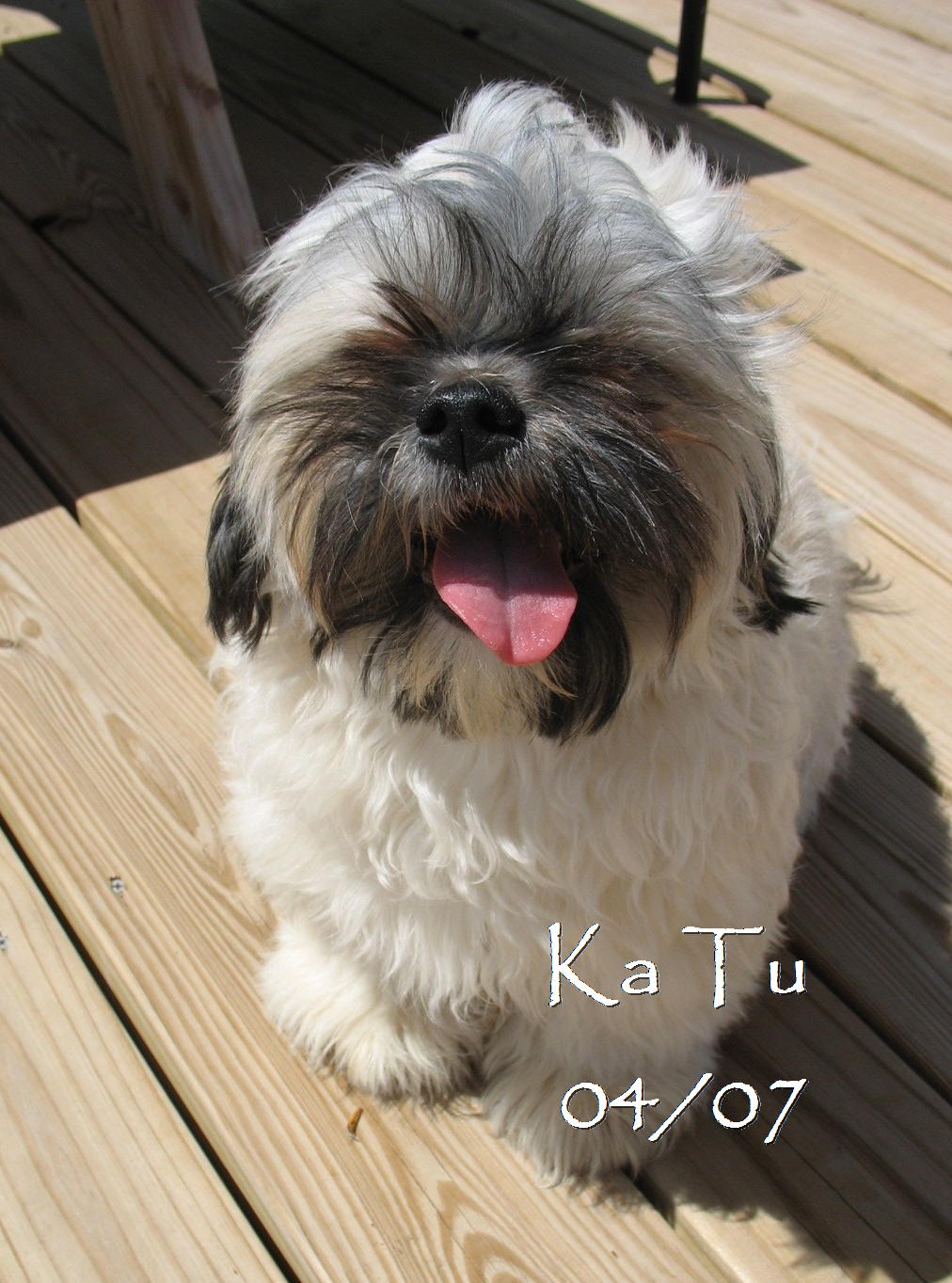
Ka Tu …

My husband finally understands what it means when I say, “Rescue allows me to have all the dogs I ever wanted … they just go live with someone else eventually.”  Despite the fact that he calls every foster “Larry” because he can’t remember their individual names when they’re milling around underfoot, he has been paying attention and can, for the most part, identify each foster.  One of the perks of being a placement coordinator is I get regular updates on the fosters who are now in their permanent homes.  Visitors to the rescue site — ApsoRescueColorado.org — read the dogs’ initial stories but hear little about them after they’re adopted.  We’re fixin’ to change that, beginning with this post (if you’ve ever been below the Mason-Dixon line, you know the definition of “fixin’ to”).

Ka Tu, a 7-month old male, arrived in rescue via a Denver vet clinic where he had been surrendered when the owner refused to pay for treatment.  I say “owner”, but it was actually the husband of the owner.  Seems the wife was out of town when the surrender occurred.  I can only imagine the conversation that ensued once she found out hubby dumped her puppy at a local vet clinic with a severe injury that was suspect for causation. 

Ka Tu ... arriving in Rescue

Ka Tu had suffered a fractured lower mandible, rendering him unable to eat solid food and in quite a bit of pain.  After a week’s stay in the Denver vet clinic, two of the ER vets drove him to Loveland after a completing a night shift.  Definitely above and beyond the call of duty.  After several trips to our vet and consultation with a dental expert, a conservative course of treatment was undertaken rather than opting for surgery.  Basically, what this meant was Ka Tu couldn’t have anything solid to eat or chew on for a minimum of six to eight weeks.  That in itself presented a problem as our dogs are fed hard kibble … it also meant that every meal was a preparation of ground-up kibble gruel for the little fella.  After weeks of meal prep and twice monthly trips to the vet for x-rays to determine how his jaw was healing, Ka Tu emerged with a fully functional lower jaw … and a crooked little smile.

Hangin' on the deck ...

Ka Tu recently celebrated his first “Gotcha” anniversary with his new family, Trudi, Paul, Helen and the three cats.  I’m getting the idea that he’s bit spoiled but … who could resist this face?

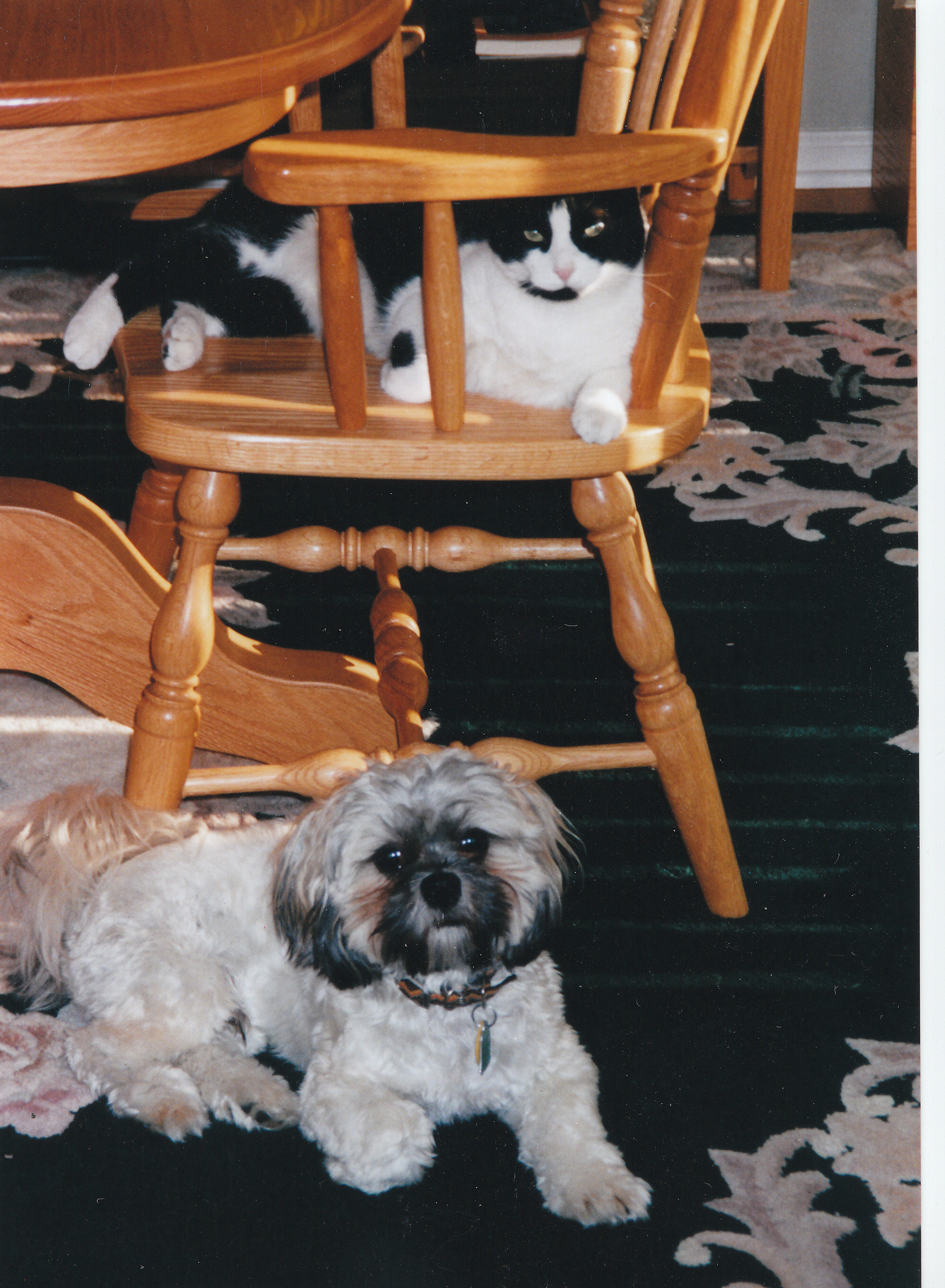
Ka Tu and feline friend ...


Checkin' out Dad's chair ...
Checkin’ out Dad’s chair …

Happy Gotcha Day, Ka Tu … you are one lucky little pup!


It’s raining … Apsos!!!

Folks, rescue desperately needs some help.  We’re being inundated with calls to take in owner-surrendered Apsos and strays.  Unfortunately, we only have two foster homes in Colorado … myself and my rescue partner.  We simply do not have the space to intake any more at this time.  If you’ve adopted from us in the past, you are already approved as a foster home!! 

Please consider sharing a bit of your home and heart with a little one that desperately needs a second chance.  If interested, please read “Brother, Can You Spare” and then contact ApsoRescue@aol.com with any questions regarding our policies/procedures, what fostering entails, and how you can help.

Alone and Afraid

There I sat, alone and afraid,
You got a call and came right to my aid.
You bundled me up with blankets and love.
And, when I needed it most, you gave me a hug.

I learned that the world was not all that scary and cold.
That sometimes there is someone to have and to hold.
You taught me what love is, you helped me to mend.
You loved me and healed me and became my first friend.

And just when I thought you’d done all you do,
There came along not one new lesson, but two.
First you said, “Sweetheart, you’re ready to go.
I’ve done all I can, and you’ve learned all I know.”

Then you bundled me up with a blanket and kiss.
Along came a new family, they even have kids!
They took me to their home, forever to stay.
At first I thought you sent me away.

Then that second lesson became perfectly clear.
No matter how far, you will always be near.
And so, Foster Mom, you know I’ve moved on.
I have a new home, with toys and a lawn.

But I’ll never forget what I learned that first day.
You never really give your fosters away.
You gave me these thoughts to remember you by.
We may never meet again, and now I know why.

You’ll remember I lived with you for a time.
I may not be yours … but you’ll always be mine.

A Dog Day …

What a whirlwind summer this has been!!  Can’t believe we’re into July already … I’m still trying to figure out how/where we missed the month of March.  And speaking of July, hope everyone has a safe 4th of July … with no lost dogs due to the fireworks.  One of my Apsos is particularly sensitive to loud booming noises (thunder) so we utilize whatever’s available to lessen the stress of the evening.  A bandana sprayed with ComfortZone, a stereo or TV playing loudly, potty runs well before the big fireworks go off in the ‘hood, etc., etc.

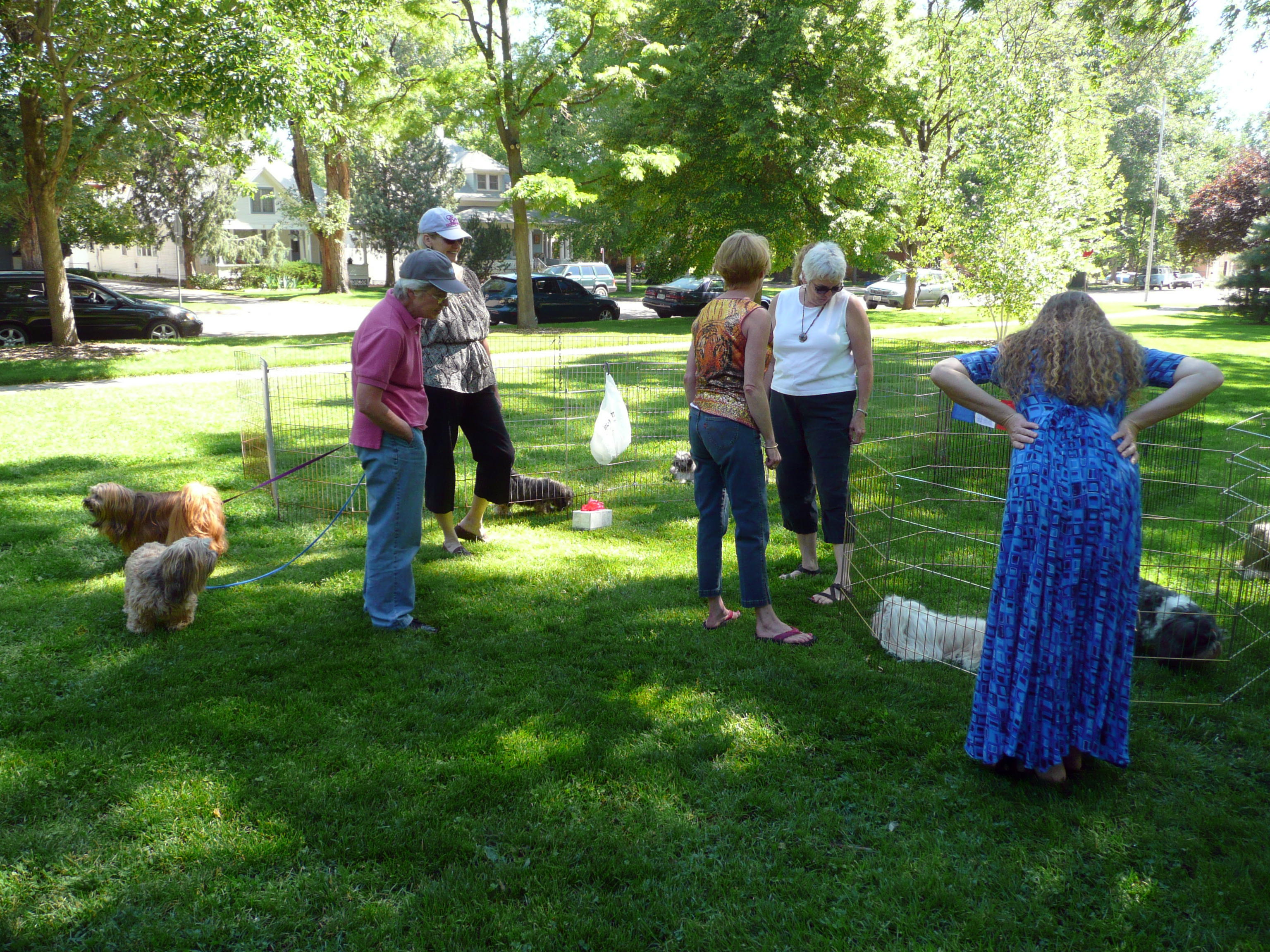
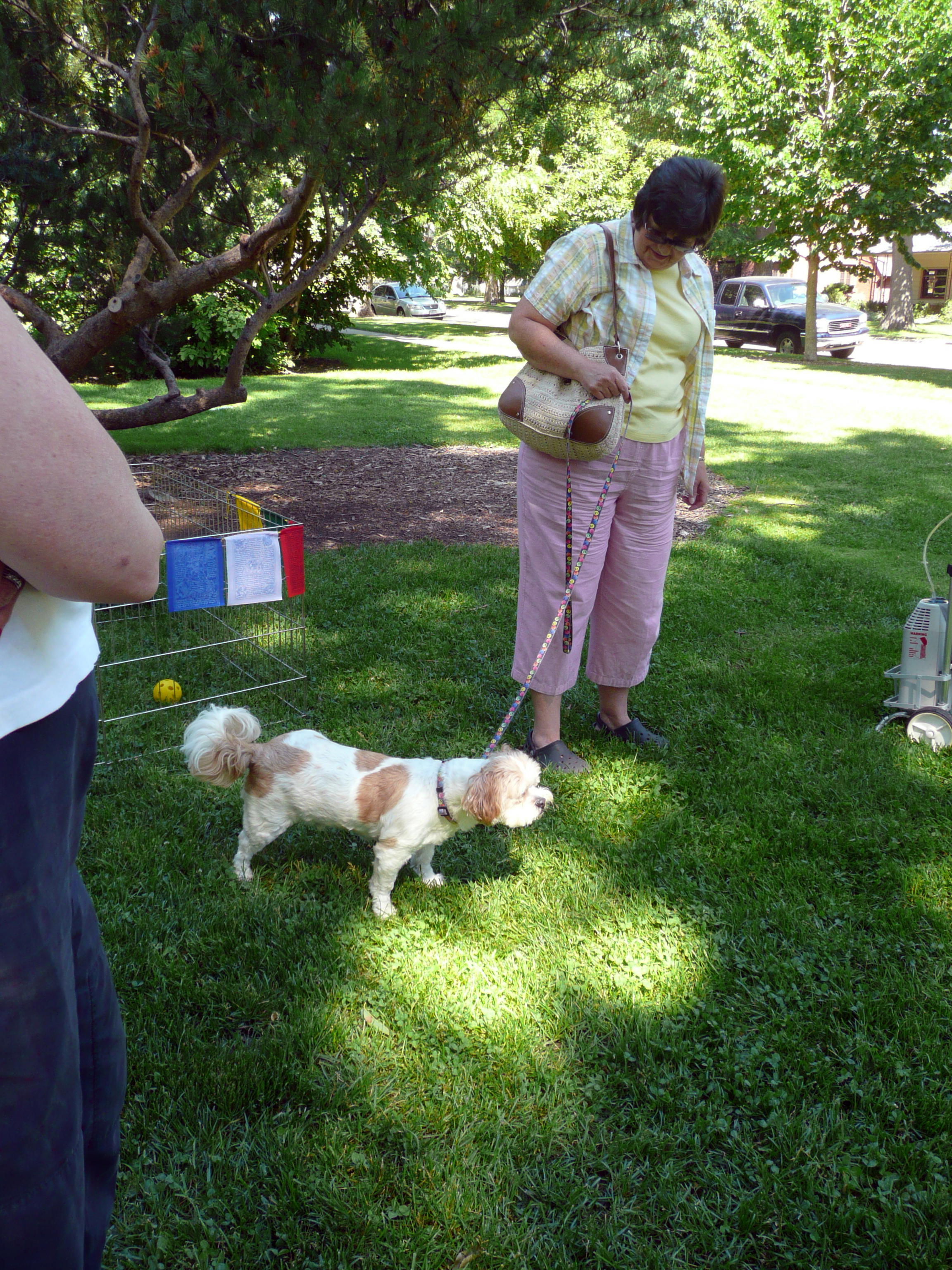
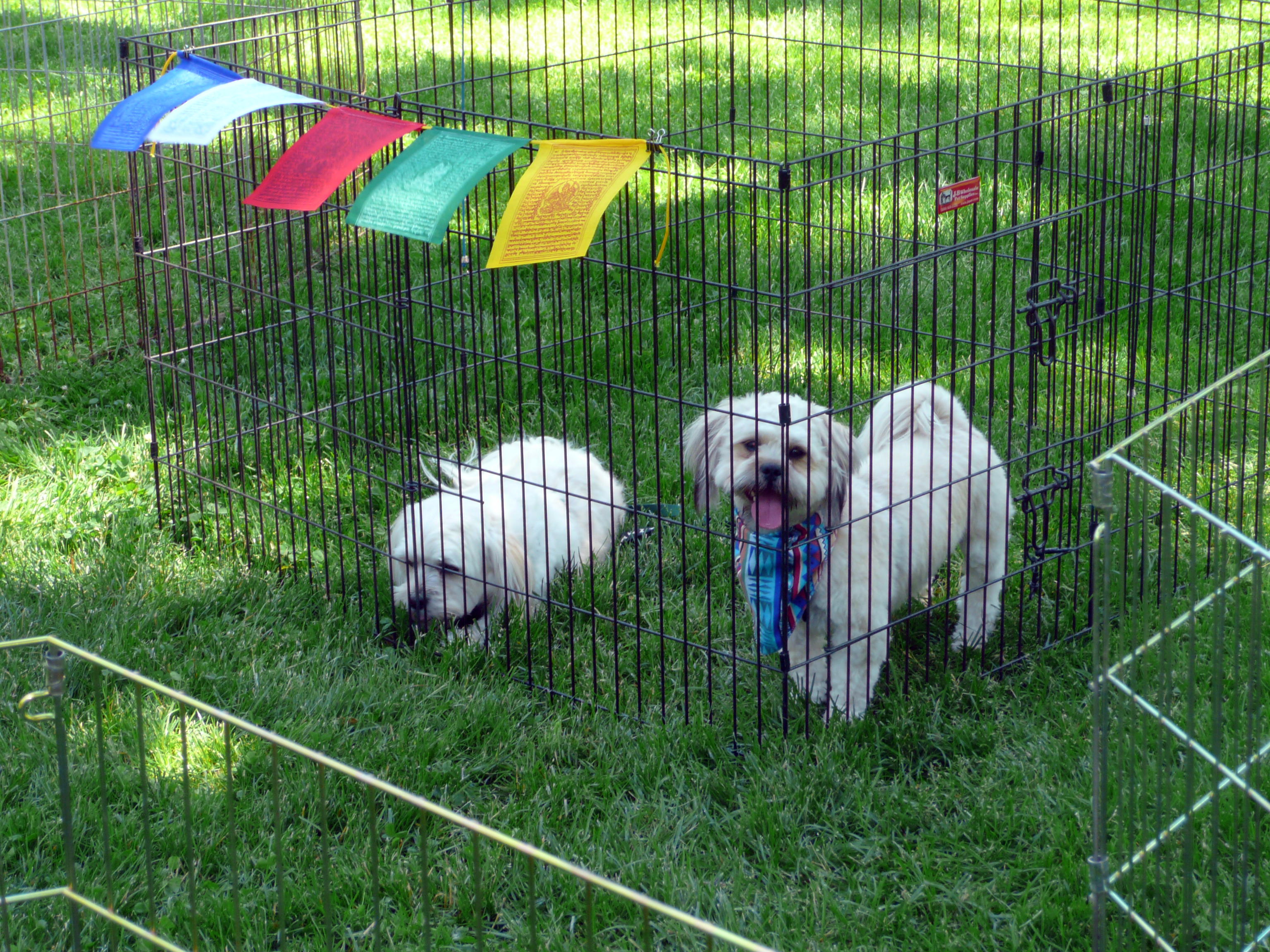
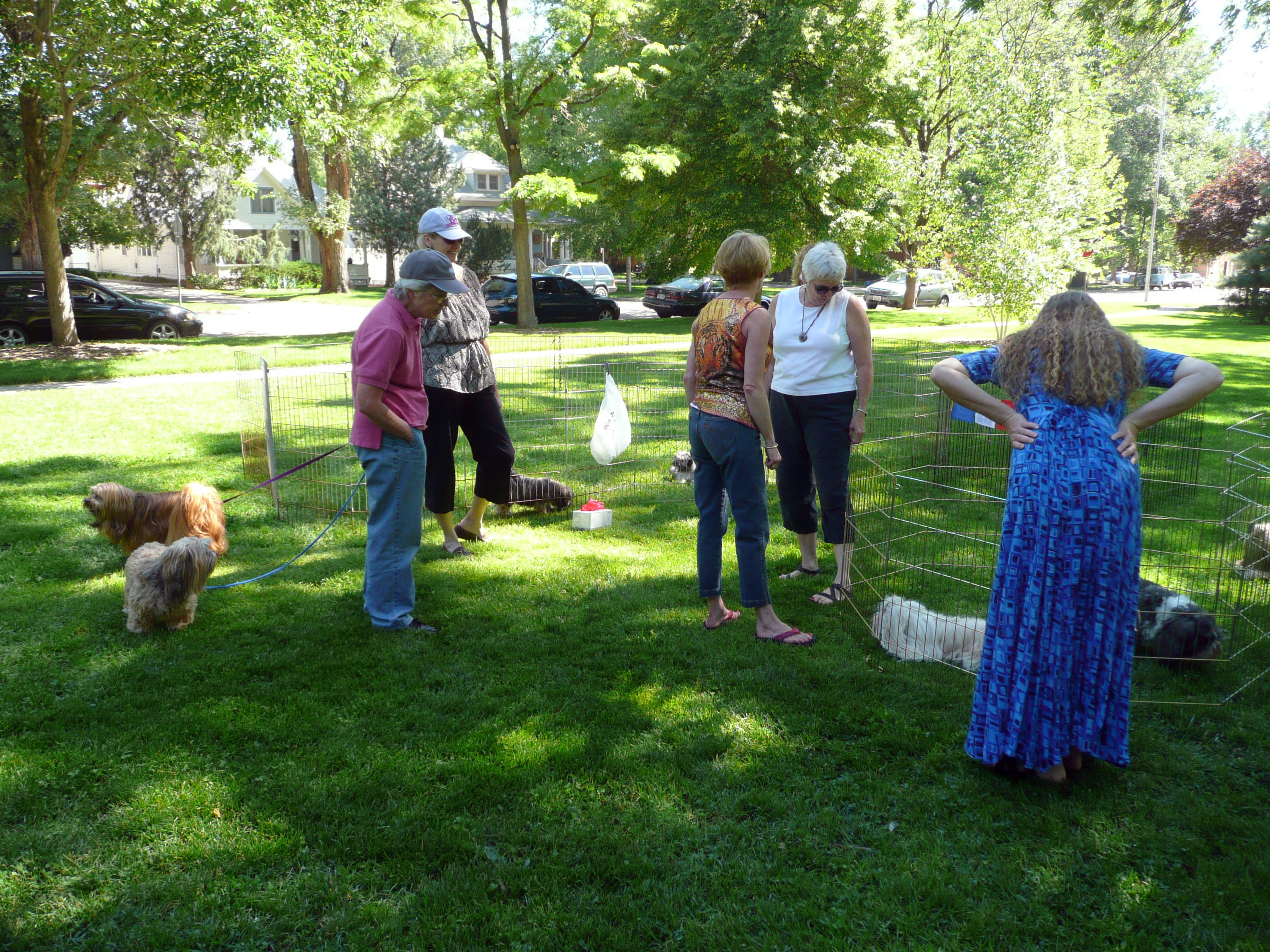
The Rescue Reunion on June 21st was apsolutely a success!  We couldn’t have picked a better spot for the day or better weather for the dogs.  Lush green grass, lots of shade, restroom close by, a large covered shelter with picnic tables, and even electricity had we needed it!  Some photos …

 Hanging with the dogs in the x-pens …  


Magoo, meeting his many admirers … his is a pretty amazing story!


Senghe (r) and Davinci (f/k/a Sterling) …


Magoo again …


Shelter and view of the park …


 Current foster, Murphy


A Gompa puppy, Whisper …


A recurrent comment for the day was, “Is this going to be an annual event??”  Well, we’d certainly like to make it an annual event.  It’s not often that a pet owner is exposed to such a large group of the same breed, noting how different each dog was but yet so similar!  It was also nice for those of us who exhibit in conformation as we didn’t have to worry about getting a dog all gussied up and in the ring by a certain time.  Just a nice, relaxing dog day.  After the potluck lunch, there was a discussion and handout regarding current vaccination protocols. Shortly thereafter was a quick grooming presentation by Debby … I think we all learned a trick or two with that.  Next up was Lhasa Races — everyone was a good sport as we muddled our way through the race program.  Basically, if you missed our first ever gathering, you missed a great day in the park!

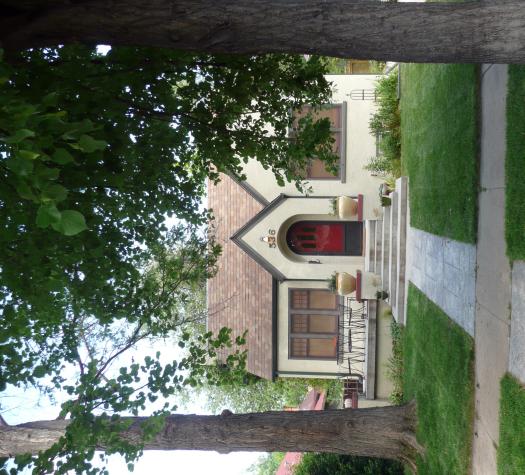
Longmont has a rich and diverse background with stately old neighborhoods.  Before leaving town, we just had to do a tour around the park area.  Couple homes that really caught my eye …


Comments …

I can be sooo technologically inept at times … like with this Blog.  If you’ve made a comment on any of the entries, they were inadvertently deleted — sight unseen.  WordPress utilizes a spam catcher (I got that part). What I didn’t realize was that when I told it to “delete all spam comments,” it was also deleting pending comments that were in another part of the admin area.  An area I didn’t find until this morning.  After I’d deleted everything.

Or perhaps it was all spam (no, I don’t need any life insurance, thank you) and I’m merely babbling into cyberspace about the unique creatures that share our life/home and our rescue efforts.   ::::::pressing nose against screen and tapping monitor::::::   Hellooooo, anybody out there?!

To make this dog/rescue related:  We’re dogsitting a former foster through the end of June.  A foster that most likely would have become a permanent fixture had a certain puppy not arrived on the scene (and hubby throwing a royal hissy fit about “having too many dogs”).  In any event, Dinky comes back to visit every now and again when his owners are on an extended vacation. 

Everyone looks forward to Dinky’s arrival, dogs and humans alike.  He’s my Frankie’s best buddy and they wear each other out with their romping and ‘rassling.  Dinky is a well-behaved little fella; he walks in the door and it’s like he never left, settling into the household routine seamlessly.  Hubby finally  admitted this weekend that, should Dinky ever end up in rescue again (highly unlikely because his owners have spoiled him rotten), he’d become a permanent member of the family.  I think this had something to do with that turn of thought …

Yup, that’s our Dinky, suckin’ up big time!  Not sure who is enjoying the one-on-one time more … hubby or Dinky.


The Ranch …

In the GroupsUp until last year, the “local” dog show in Larimer County was held at the Oval on the campus of CSU in August.  An apsolutely beautiful setting … unless it was 100 degrees in the shade or raining (and you could usually count on one or the other or both during the course of a weekend).  Beginning last year, the Buckhorn Kennel Club changed dates and venues for its show — definitely a good thing!

This year finds us at The Ranch the weekend of June 28/29.  An all-breed show, one can find their choice of dog to cheer on and in an air-conditioned venue.  The Judging Program contains information on ring times, rings and judges.  Looks like we’ll have a fairly decent turn out of Apsos in Ring 3 at 1:00 p.m. on both days.  There will also be a Canine Art Show and Sale both days.  Should be interesting as Loveland is a mecca for fine artists.  If making a special trip to Loveland for the show, one should definitely plan on visiting Benson Sculpture Park!!

Come join us at the show …  

You’re Invited … to a Rescue Reunion!!

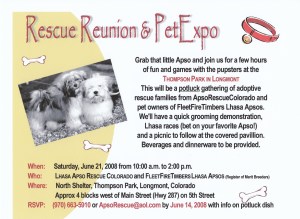
While it has been a long-time coming, we’ve finally got solid plans … and a beautiful site to hold our first ever Rescue Reunion.  Right about now, you’re probably asking yourself what exactly is a “rescue reunion.”  Simply stated, it is a gathering of all the families (and dogs) that have adopted from our organization.  Date for the event:  June 21, 2008 from 10:00 a.m. to 2:00 p.m.  UPDATE ON LOCATION:  Due to a scheduling conflict, we’ve reserved space at Thompson Park, located 4 blocks west of Main Street (Hwy 287) on 5th Street in Longmont.  Why Longmont?  We have families all over the Front Range and Longmont is the most central (not to mention it is a nice little city away from the hustle/bustle of Denver).

Also attending the Apso Picnic will be pet owners of FleetFireTimbers Lhasa Apsos.  If you’ve been to my house, you’ve met dogs of this lineage … Frankie and Dante, to be exact.  The owners of FFT dogs are as delightful as the dogs themselves.  Basically this is a gathering to enjoy dogs and dog folk.  We’ll have a quick grooming seminar (faces/feet/butts), a handout on current vaccination protocols, Lhasa Races with betting (actual dogs don’t race, but we think you’ll have a blast anyway), and a potluck picnic. 

A bit of history …  Thompson Park is one of the three parks designed into the original Chicago-Colorado Colony town plat. The park is named after Elizabeth Rowell Thompson (1820-1899), a renowned philanthropist, temperance reformer and abolitionist who lived on the East Coast. A Boston reporter in 1899, called her the “founder of Longmont, Colorado”.  In 1890, Judge F.P. Secor rented Thompson Park for $14 per month to graze his and a neighbor’s milk cows. The ladies of the town planted trees in the park and helped keep them alive with buckets of water from the St.Vrain — trees that still stand today and are identified in a brochure available from the Parks and Forestry Services Office (“The Trees of Thompson Park”).

Click on the link for a .pdf of the Invitation …  Rescue Reunion & PetExpo

This will be a potluck style gathering.  Please bring a covered dish and chairs.  Beverages and dinnerware will be provided.  We are asking for RSVPs so we have an idea of how much we’ll need to bring for both dogs and humans.  Please RSVP by June 14th at (970) 663-5910 or send an email to ApsoRescue@aol.com.


A Free Tibet …

Many an Apso fancier has been intently watching the recent events unfold in Tibet, ever mindful that the breed we hold so dear teeters on the brink of extinction in its native land.  The same holds true for the Tibetans, their culture and their religion which is an integral part of their day-to-day thoughts and activities.  Some of us have begun protesting, both physically and monetarily.  I know I’m checking labels much more closely these days for origin of manufacture. 

Tibet: Her Pain, My Shame 

China Digital Times [Wednesday, March 26, 2008 00:02] 
Tang Danhong (born in 1965 ) is a poet and documentary filmmaker from Chengdu, Sichuan. She has made several documentaries in and about Tibet since the 1990s. She wrote the following essay this week and published it on her own blog (hosted outside of China), partially translated by CDT:

For more than a decade, I have frequently entered Tibet and often stayed there for a long time, traveling or working. I have met all kinds of Tibetans, from youngsters on the streets, folk artists, herders on the grasslands, voodoo doctors in mountain villages, to ordinary cadres in state agencies, street vendors in Lhasa, monks and cleaners in monasteries, artists and writers.Among those Tibetans I have met, some frankly told me that Tibet was a small country several decades ago, with its own government, religious leader, currency and military; some stay silent, with a sense of helplessness, and avoid talking with me, a Han Chinese, afraid this is an awkward subject. Some think that no matter what happened, it is an historical fact that Chinese and Tibetans had a long history of exchanges with each other, and the relationship must be carefully maintained by both sides. Some were angered by the railway project, and by those roads named “Beijing Road,” “Jiangsu Road,” “Sichuan-Tibet road,” but others accept them happily. Some say that you (Han Chinese) invest millions in Tibet but you also got what you wanted and even more; some say you invest in the development but you also destroy, and what you destroy is exactly what we treasure …  What I want to say here is that no matter how different these people are, they have one thing in common: They have their own view of history, and a profound religious belief.

For anyone who has been to Tibet, he/she should sense such a religious belief among Tibetans. As the matter of fact, many are shocked by it. Such attitude has carried on throughout their history, and is expressed in their daily lives. This is a very different value, especially compared with those Han Chinese who have no beliefs, and now worship the cult of money. This religious belief is what Tibetans care about the most. They project this belief onto the Dalai Lama as a religious persona.

For anyone who has been to Tibet, it should not be strange to see the “common Tibetan scene”: Is there any Tibetan who does not worship him (the Dalai Lama)? Is there any Tibetan unwilling to hang up his photo in his own shrine? (These photos are smuggled back in from abroad, secretly copied and enlarged, not like those Mao portraits printed by the government that we Han Chinese once had to hang up.) Is there any Tibetan who wants to verbally disrepect the Dalai Lama? Is there a Tibetan who does not want to see him? Is there any Tibetan who does not want to present Hada [white welcoming scarf] to him?

Other than those voices that the rulers want to hear, have we ever heard the Tibetans’ full, real voices? Those Han Chinese who have been in Tibet, now matter if one is a high official, government cadre, tourist or businessman, have we all heard their real voices, which are silenced, but are still echoing everywhere?

Is this the real reason that all monasteries in Tibet are forbidden from hanging up the Dalai Lama’s picture? Is this the reason that all work units have officials to check in every household and to punish those who hang up his picture? Is this the reason that the government has people to stop those believers on the pilgrimage path on every religious celebration day? Is this the reason for the policy barring government employees from having their children study in Dharamsala; otherwise, they will be fired and their house will be taken away? Is this the reason that at all sensitive times, government officials will hold meetings in monasteries, to force monks to promise to “support the Party’s leadership” and “Have no relations with the Dalai splitist cliques”? Is this the reason we refuse to negotiate, and constantly use dehumanizing language to humiliate him? After all, isn’t this the very reason to reinforce the “common Tibetan scene,” making this symbol of nationality more holy?

Why can’t we sit down with the Dalai Lama who has abandoned calls for “independence” and now advocates a “middle way,” and negotiate with him with sincerity, to achieve “stability” and “unity” through him?

Because the power difference of the two sides is too big. We are too many people, too powerful: Other than guns and money, and cultural destruction and spiritual rape, we do not know other ways to achieve “harmony.”

This group of people who believe in Buddhism because they believe in cause and effect and transmigration of souls, oppose anger and hatred, developed a philosophy that Han nationalists will never be able to understand. Several Tibetan monk friends, just the “troublemaker monk” type that are in the monasteries explained to me their view on “independence”: “actually, we may well have been ethnic Han in a previous incarnation, and in our next incarnation we might well become ethnic Han. And some ethnic Han in a previous life may well have been Tibetan or may become Tibetan in their next life. Foreigners or Chinese, men or women, lovers aand enemies, the souls of the world transmigrate without end. As the wheel turns, states arise and die, so what need is there for independence?” This kind of religion, this kind of believer, can one ever think that they would be easy to control? Yet there is a paradox here: if one wants them to give up the desire for independence, then one must respect and protect their religion.

Not long ago, I read some posts by some radical Tibetans on an online forum about Tibet. These posts were roughly saying: “We do not believe in Buddhism, we do not believe in karma. But we have not forgotten that we are Tibetan. We have not forgotten our homeland. Now we believe the philosophy of you Han Chinese: Power comes out of the barrel of a gun! Why did you Han Chinese come to Tibet? Tibet belongs to Tibetans. Get out of Tibet!”

Of course behind those posts, there are an overwhelming number of posts from Han ” patriots.” Almost without exception, those replies are full of words such as “Kill them!” “Wipe them out!” “Wash them with blood!” “Dalai is a liar!” – those “passions” of the worshippers of violence that we are all so familiar with.

When I read these posts, I feel so sad. So this is karma …

In the last week, after I put down the phone which cannot reach anyone on the the other end, when I face the information black hole caused by Internet blockage, even I believe what Xinhua has said – strangely I do believe this part: There were Tibetans who set fire to shops and killed those poor innocent Han Chinese who were just there to make a living. And I still feel extremely sad. Since when were such seeds planted? During the gunshots of 1959? During the massive destruction during the Cultural Revolution? During the crackdown in 1989? During the time we put their Panchen Lama under house arrest and replaced him with our own puppet? During those countless political meetings and confessions in the monasteries? Or during the time when a seventeen-year-old nun was shot on the magnificent snowy mountain, just because she wanted to see the Dalai Lama?

Or during numerous moments which seem trivial but which make me ashamed: I was ashamed when I saw Tibetans buy live fish from Han fish sellers on the street and put them back in the Lhasa river; I was ashamed when I saw more and more Han beggars on the streets of Lhasa-even beggars know it is easier to beg in Tibet than in Han areas; I felt ashamed when I saw those ugly scars from mines on the sacred mountains in the morning sunlight; I felt ashamed when I heard the Han Chinese elite complain that the Chinese government has invested so many millions of yuan, that economic policy favors Tibetans, and that the GDP has grown so fast, so, “What else do these Tibetans want?”

Why can’t you understand that people have different values? While you believe in brainwashing, the power of a gun and of money, there is a spiritual belief that has been in their minds for thousands of years and cannot be washed away. When you claim yourselves as “saviors of Tibetans from slavery society,” I am ashamed for your arrogance and your delusions. When military police with their guns pass by me in the streets of Lhasa, and each time I am there I can see row upon row of military bases. yes, I, a Han Chinese, feel ashamed.

What makes me feel most ashamed is the “patriotic majority”: You people are the decedents of Qinshi Huangdi who knows only conquering by killing; you are the chauvinists who rule the weak by force; you are those cowards who hide behind guns and call for shooting the victims; you suffer from Stockholm Syndrome; you are the blood-thirsty crazies of an “advanced” culture of Slow slicing and Castration. You are the sick minds waving the “patriotic” flag. I look down on you. If you are Han Chinese, I am ashamed to be one of you.

Lhasa is on fire, and there are gunshots in Tibetan areas in Sichuan and Qinghai. Even I believe this – actually, I do believe this part of the facts. In those “patriotic” posts which shout “Kill them!” “Wipe them out!” “Wash them with blood!” “Dalai is a liar!” I saw the mirror image of those Tibetan radicals. Let me say that you people (“patriotic youth”) are Han chauvinists who destroy thousands of years of friendship between Han and Tibetan people; you are the main contributors to the hatred between ethnic groups. You people do not really “highly support” the authority; rather, you people are in effect “highly supporting” “Tibetan independence.”

Tibet is disappearing. The spirit which makes her beautiful and peaceful is disappearing. She is becoming us, becoming what she does not want to become. What other choice does she have when facing the anxiety of being alienated? To hold onto her tradition and culture, and revive her ancient civilization? Or to commit suicidal acts which will only add to Han nationalists’ bloody, shameful glory?

Yes, I love Tibet. I am a Han Chinese who loves Tibet, regardless of whether she is a nation or a province, as long as she is so voluntarily. Personally, I would like to have them (Tibetans) belong to the same big family with me. I embrace relationships which come self-selected and on equal footing, not controlled or forced, both between peoples and nations. I have no interest in feeling “powerful,” to make others fear you and be forced to obey you, both between people and between nations, because what’s behind such a “feeling” is truly disgusting. I have left her (Tibet) several years ago, and missing her has become part of my daily life. I long to go back to Tibet, as a welcomed Han Chinese, to enjoy a real friendship as equal neighbor or a family member.

A New Arrival …

… is always exciting! 

Tomorrow, if all goes as planned, “Bentley” will become the latest foster in rescue.  An unneutered three-year old, he will be looking for a new home that can spend more time with him.  While we gather as much information as possible on our intakes, there’s always the unknown.  How will he do with other dogs … how will he come through his neuter … how will he react to his first grooming in rescue … what will he think of the resident felines … will he sleep through the night … is he *really* potty trained and crate trained … does he like children or do we need to find a home that limits his contact with toddlers … is he a hearty eater or a picky one?  So many questions!!

These little ones arrive in rescue and we treat them just as one of the pack.  They are expected to behave and, with training (some more, some less), they usually live up to our expectations.  They thrive on attention and structure.  It isn’t long before they settle in … and it’s like they’ve been here their entire lives.  Every now and again, a foster will return for an extended visit.  They walk through the door and move seamlessly from their house to ours again, like they never left. 

I used to think my dogs couldn’t live without me — wishful thinking on my part.  After all the fosters that have passed through my home, I’ve come to realize the canine is much more adaptable than we give them credit for.  Indeed, it is this adaptability that has ensured their survival through the ages! 

Welcome, Bentley … we look forward to getting to know you.

UPDATE:  Well, things *didn’t* go as planned, unfortunately, and, for the time being, Bentley will not be entering rescue.  Bentley managed to run away from home on the eve he was to arrive in rescue.  We hope he finds his way home again, safe and sound.  If anyone happens to find a little grey/white Apso in Lochbuie, Colorado, please contact us!